
ISMed-RET
Welcome to the ISMed-eRET blog
Insights into structured feedback, medical education, and the use of ISMed-eRET.
Published 2 min read
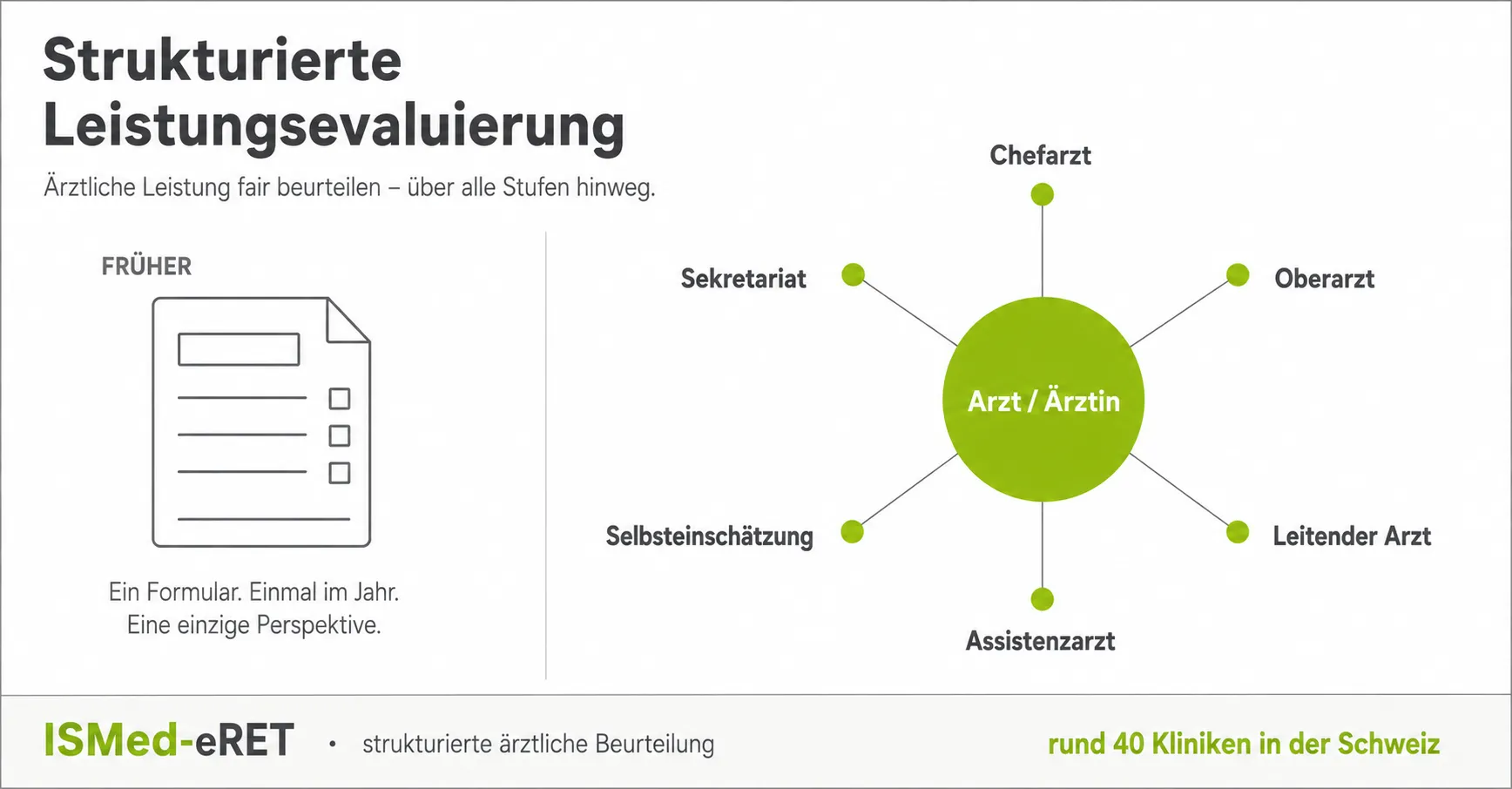
The ISMed-eRET blog is for institutions and professionals working with structured medical education and feedback. Here, we put topics related to the Resident Evaluation Tool into context and show how they matter in day-to-day work.
Why this blog exists
Regular feedback supports the development of physicians. It also raises practical questions: Which perspectives belong in an assessment? How can discussions be prepared and progress documented in a comprehensible way? This blog addresses such questions and explains them clearly.
Good feedback is not a judgement – it is a conversation among equals.
What we will publish
We will write about structured performance assessment, 360-degree feedback, and supporting medical education. Articles will also look at collaboration between trainees, supervisors, and institutions, as well as the role of digital tools in these processes.
| Area | Example topics |
|---|---|
| Feedback | 360° assessment, Mini-CEX, structured conversations |
| Education | EPA framework, learning objectives, milestones |
| Technology | Digital forms, analytics, dashboards |
We will also share guidance on using ISMed-eRET, from preparing a feedback cycle to reviewing feedback and development. Concrete questions from everyday practice will remain at the centre.
Not in scope:
- Internal HR processes of individual institutions
- Medical subject matter in the narrow sense
- Legal advice
How we approach topics
Articles will be clear, practical, and professionally grounded. We explain context, present possible approaches, and link to further information where useful. Three principles guide our work:
- Practicality – content is grounded in the reality of clinics and training sites
- Evidence – recommendations build on current literature and proven concepts
- Clarity – technical terms are explained, examples illustrate implementation
A key framework is EPA (Entrustable Professional Activities), increasingly used in medical education. Further information can be found at the SIWF.
How a feedback cycle works with ISMed-eRET
The typical process has four steps:
Create cycle → Invite participants → Collect feedback → Review togetherIn upcoming articles we will explore each step and show how the process adapts to different training situations. Over time, this blog will become a resource for feedback and medical education topics.